BackwardsProgress

Backwards Progress

Glass Replacement & Installation

Serving Eastern Wisconsin & Western Minnesota

Stained Glass Repair & Restoration | WI & MN

Preserving Stained and Leaded Glass

Stained Glass Repair and Restoration in Western Wisconsin and Eastern Minnesota

Backwards Progress repairs and restores stained glass windows, leaded glass panels, doors, sidelights, transoms, and church stained glass throughout the St. Croix Valley and surrounding region.

From a single cracked piece or loose solder joint to bowed panels, deteriorated lead, and complete restoration, the work begins with a careful assessment of the glass, metalwork, frame, support, and original construction.
Repair and Restoration From localized damage to complete panel restoration
Homes and Churches Residential, religious, historic, and decorative glass
Regional Service Within approximately 80 miles of Amery, Wisconsin
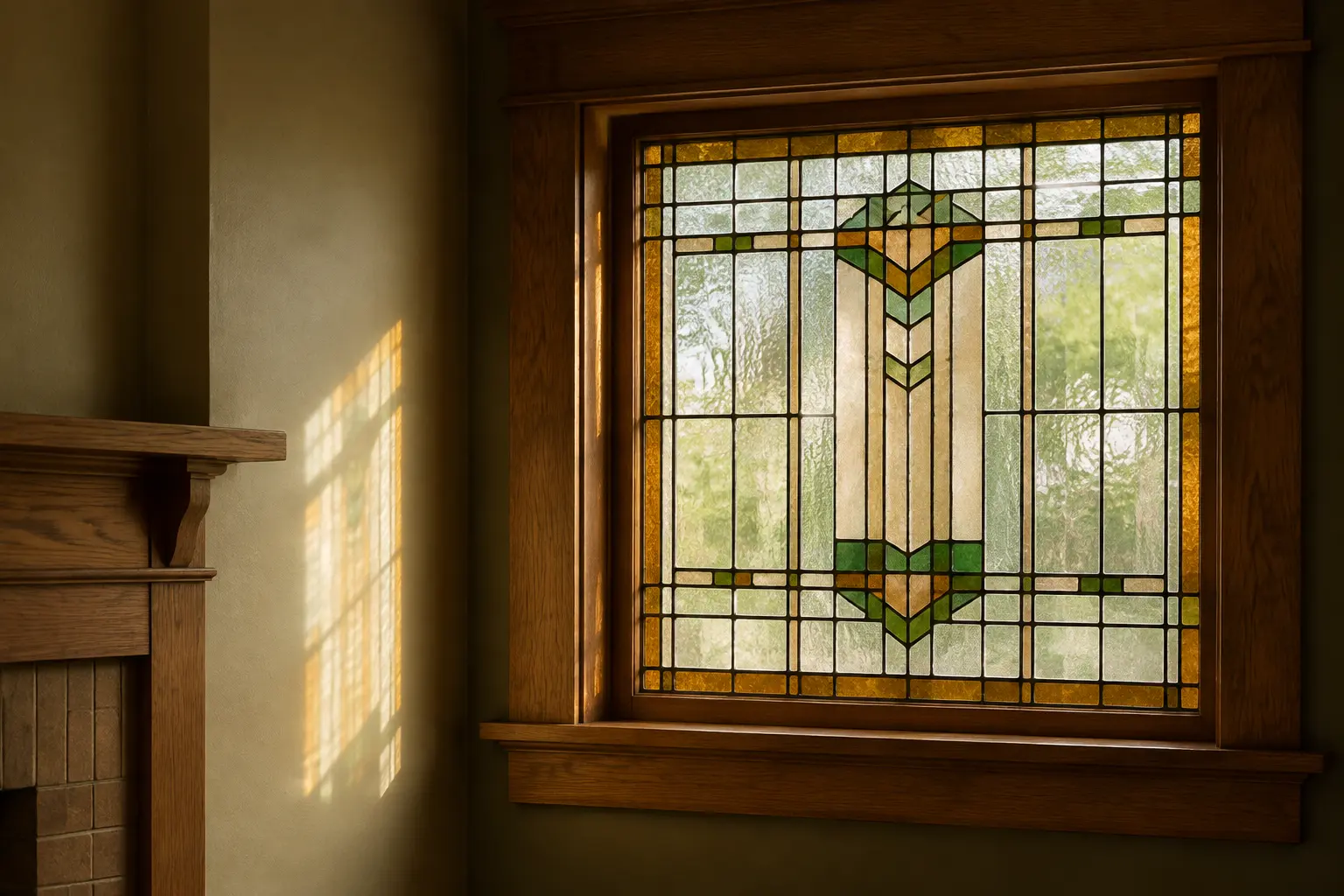
Restored Prairie-style leaded stained glass window in an oak frame
Serving the St. Croix Valley, Western Wisconsin, and nearby Eastern Minnesota communities.
Repair the Damage. Preserve the Character.

Stained Glass Services for Windows, Doors, Decorative Panels, and Places of Worship

Stained glass can fail in more than one way. The right scope depends on whether the concern is isolated broken glass, failing solder, fatigued lead came, a bowed panel, frame movement, weather exposure, or broader age-related deterioration.

Localized Repair

Cracked and Broken Stained Glass

Repair may include replacing damaged pieces, matching color and texture, addressing loose joints, and stabilizing the surrounding panel.

Complete Preservation

Stained Glass Restoration

Older or broadly deteriorated panels may require documentation, removal, disassembly, cleaning, re-leading, cementing, finishing, and reinstallation.

Doors and Entryways

Sidelights, Transoms, and Door Panels

Repair and restoration for decorative entry glass where appearance, fit, surrounding woodwork, and daily movement all matter.

Panel Stability

Bowed, Loose, or Rattling Glass

Review of lead condition, solder joints, perimeter support, reinforcing bars, frame fit, and other factors affecting panel stability.

Not sure what kind of stained glass you have? Send one photograph of the full window or panel, close-ups of the problem, rough dimensions, and the project location. Backwards Progress can use those details to begin identifying the construction and the most useful next step.

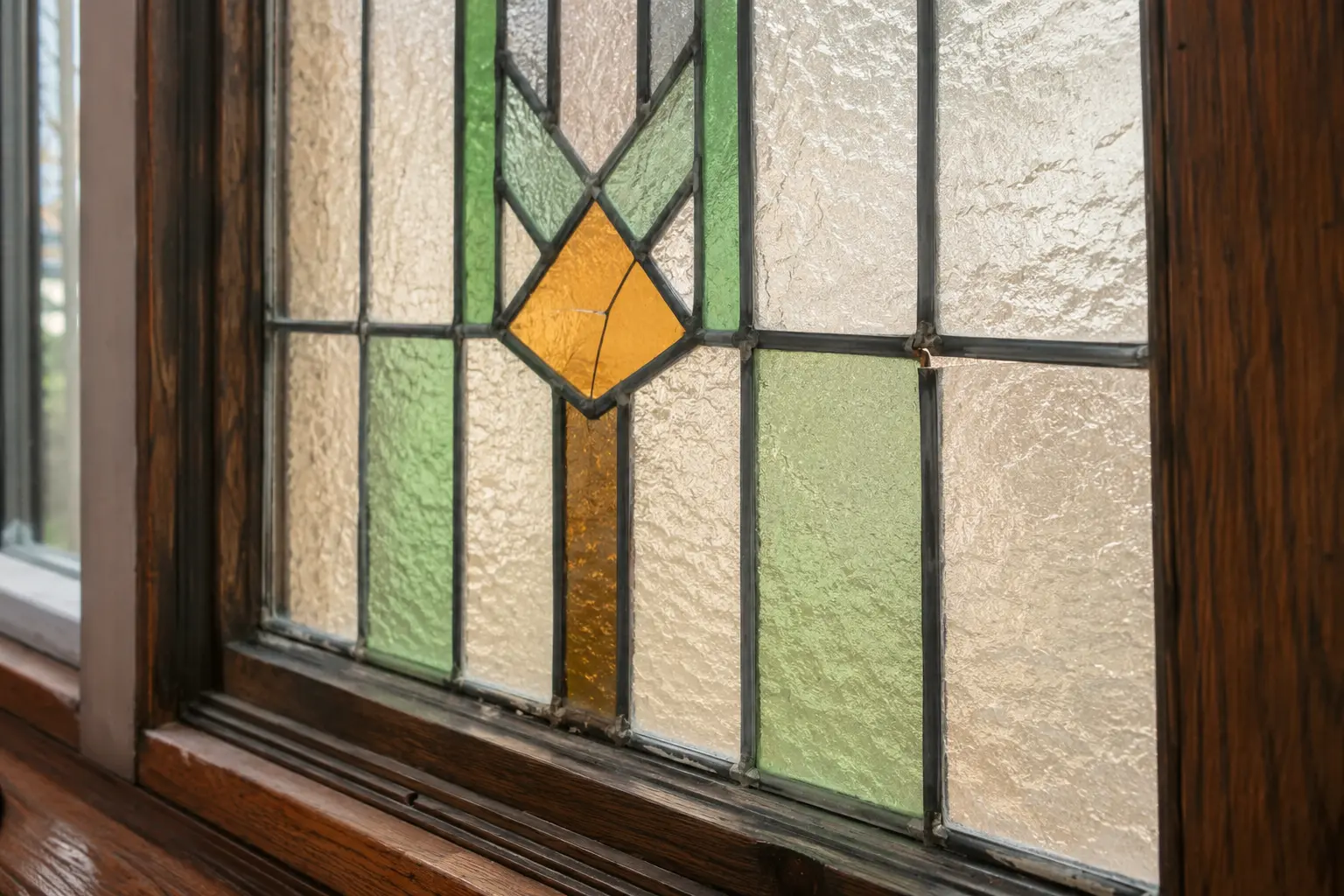
Cracked amber piece and separated solder joint in an older leaded stained glass window
Signs the Window Needs Attention

Small Stained Glass Problems Can Point to a Larger Structural Issue

A cracked piece may be the only visible problem, but it can also be the result of movement, pressure, weak lead, failed perimeter support, or a frame that no longer holds the panel correctly. Looking beyond the break helps prevent a cosmetic repair from hiding a continuing cause.

Earlier evaluation is especially important when a panel is bowing, rattling, pulling away from its frame, or showing daylight around the lead lines.

Common reasons to request an assessment

  • Cracked, chipped, missing, or poorly patched glass
  • Loose, split, or failed solder joints
  • Bowed, bulging, sagging, or distorted panels
  • Brittle, stretched, oxidized, or fatigued lead came
  • Loose cement, rattling glass, or visible gaps
  • Water intrusion, condensation, or frame deterioration
  • Damage from impact, weather, vibration, or building movement
Repair Versus Restoration

A Restoration Plan Should Match the Window's Condition—not a One-Size-Fits-All Scope

Localized stained glass repair focuses on a limited problem while preserving sound surrounding material. Complete stained glass restoration is more appropriate when deterioration affects much of the panel, the lead network has lost strength, or earlier repairs no longer support the glass correctly.

Depending on the panel, location, access, and damage, some work may be completed in place while other projects require careful removal and controlled workshop repair. The purpose of the assessment is to determine the least disruptive approach that still produces a stable result.

Preservation comes first. Original glass and meaningful historic material should be retained whenever practical. Documentation, careful handling, and compatible repair choices help preserve both the appearance and the record of the window.
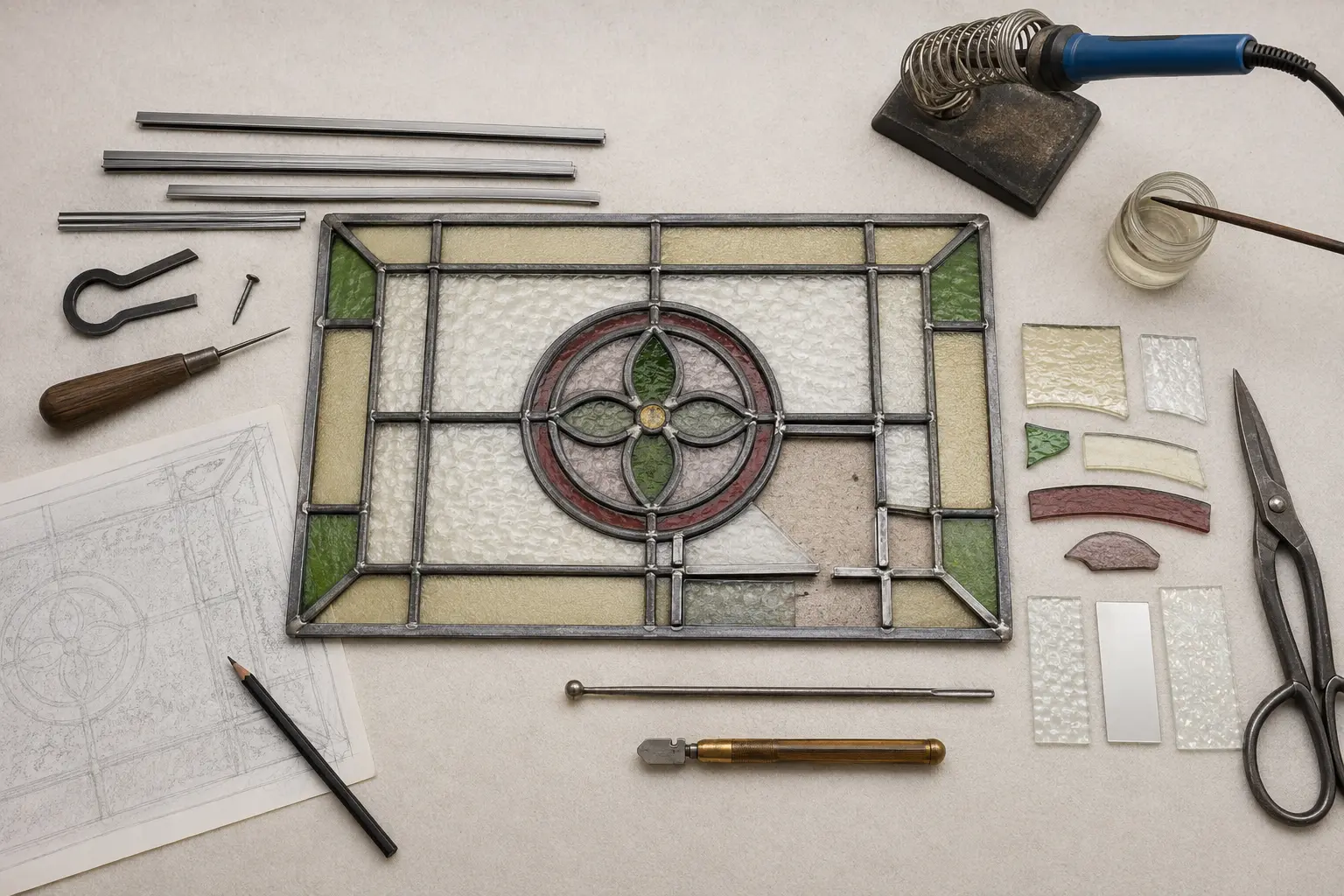
Leaded stained glass panel arranged on a restoration workbench with glass samples and hand tools
Step 1

Inspect and Document

Review glass, lead or foil, solder, reinforcement, frame, protective covering, access, dimensions, visible damage, and earlier repairs.

Step 2

Define the Scope

Determine whether the panel needs localized repair, stabilization, partial rebuilding, complete re-leading, frame work, or another coordinated solution.

Step 3

Protect the Original Design

Retain original material where practical and identify suitable color, texture, opacity, and construction for any necessary replacement pieces.

Step 4

Repair or Rebuild

Complete the approved glass, solder, lead, copper-foil, cement, reinforcement, and perimeter work required by the condition.

Step 5

Refit the Panel

Return the restored panel to a suitable frame or opening, with attention to fit, support, drainage, ventilation, and surrounding materials.

Step 6

Record the Work

Keep a clear record of the panel's condition and completed work so future owners, caretakers, or restoration professionals understand what changed.
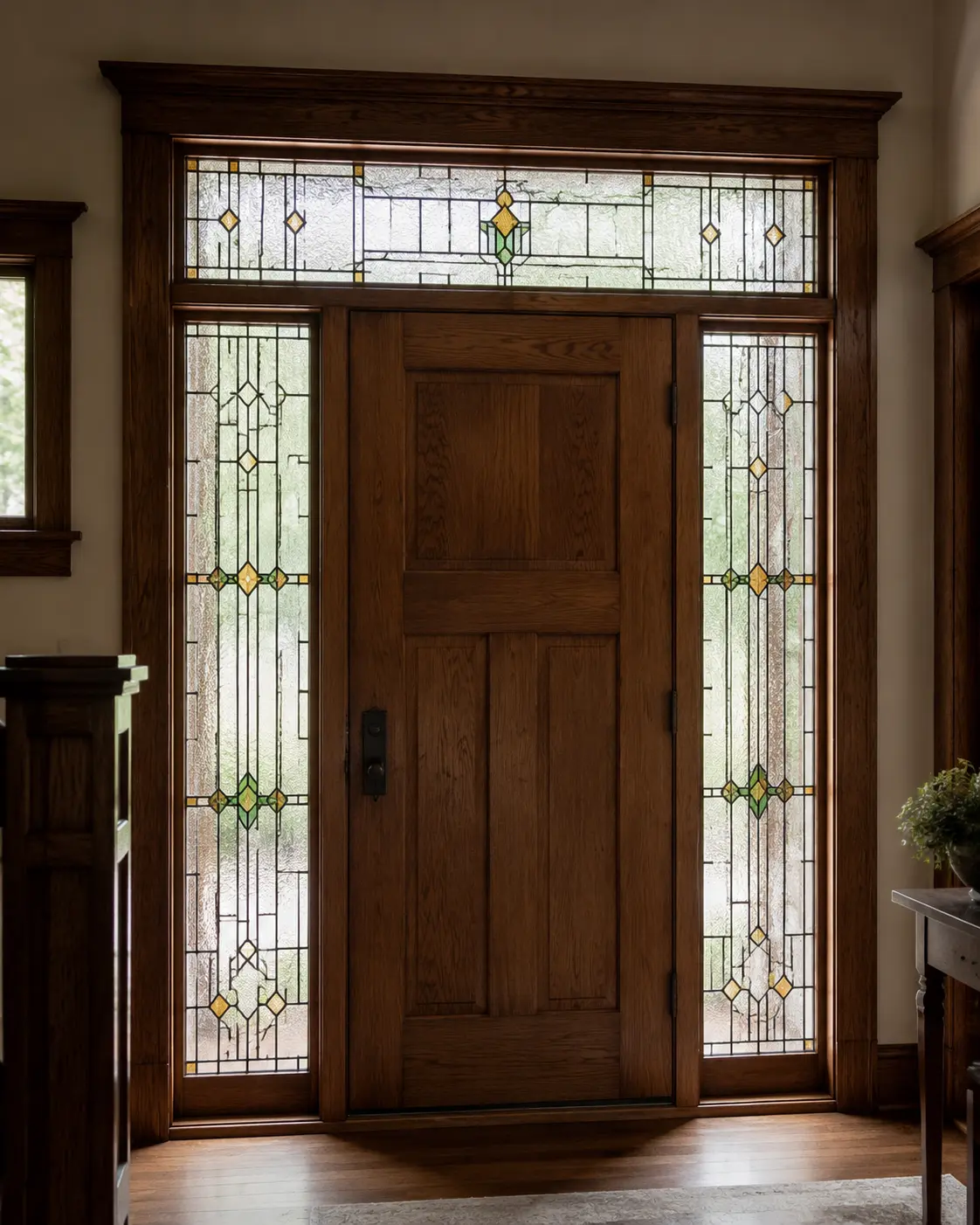
Restored leaded glass sidelights and transom surrounding an oak entry door
Residential and Historic Leaded Glass

Leaded Glass Windows, Doors, Sidelights, and Transoms

Leaded glass windows often combine clear textured glass, colored accents, bevels, zinc or lead came, and surrounding woodwork that is part of the home's original character. Repair should account for the complete assembly instead of treating the broken piece as an isolated object.

Backwards Progress works with leaded glass in older homes, entry doors, sidelights, transoms, cabinet doors, interior panels, and other architectural applications. Potential work may include individual glass replacement, solder repair, perimeter repair, re-leading, cementing, reinforcement, removal, and reinstallation.

Leaded glass projects may include:

  • Historic and antique leaded windows
  • Beveled and textured clear-glass panels
  • Entry doors, sidelights, and transoms
  • Arts and Crafts or Prairie-style windows
  • Cabinet, built-in, and interior decorative glass
  • Loose joints, weak came, bowing, and broken pieces
Churches, Chapels, and Houses of Worship

Church Stained Glass Repair and Restoration

Church stained glass may carry artistic, historic, memorial, and congregational significance in addition to serving as part of the building envelope. That makes documentation, access planning, panel stability, original glass retention, and communication with church decision-makers especially important.

A church project may involve a localized broken piece, loose solder, failing lead, bowing panels, deteriorated frames, unsuitable protective coverings, or a larger phased restoration. Backwards Progress can assess the visible conditions and develop a scope that explains priorities and next steps.

Church stained glass planning may address:

  • Condition assessment and photographic documentation
  • Cracked, missing, or previously repaired glass
  • Lead fatigue, failed joints, bowing, and panel support
  • Careful removal, workshop restoration, and reinstallation
  • Frames, support systems, drainage, and ventilation concerns
  • Prioritized or phased work for larger window groups
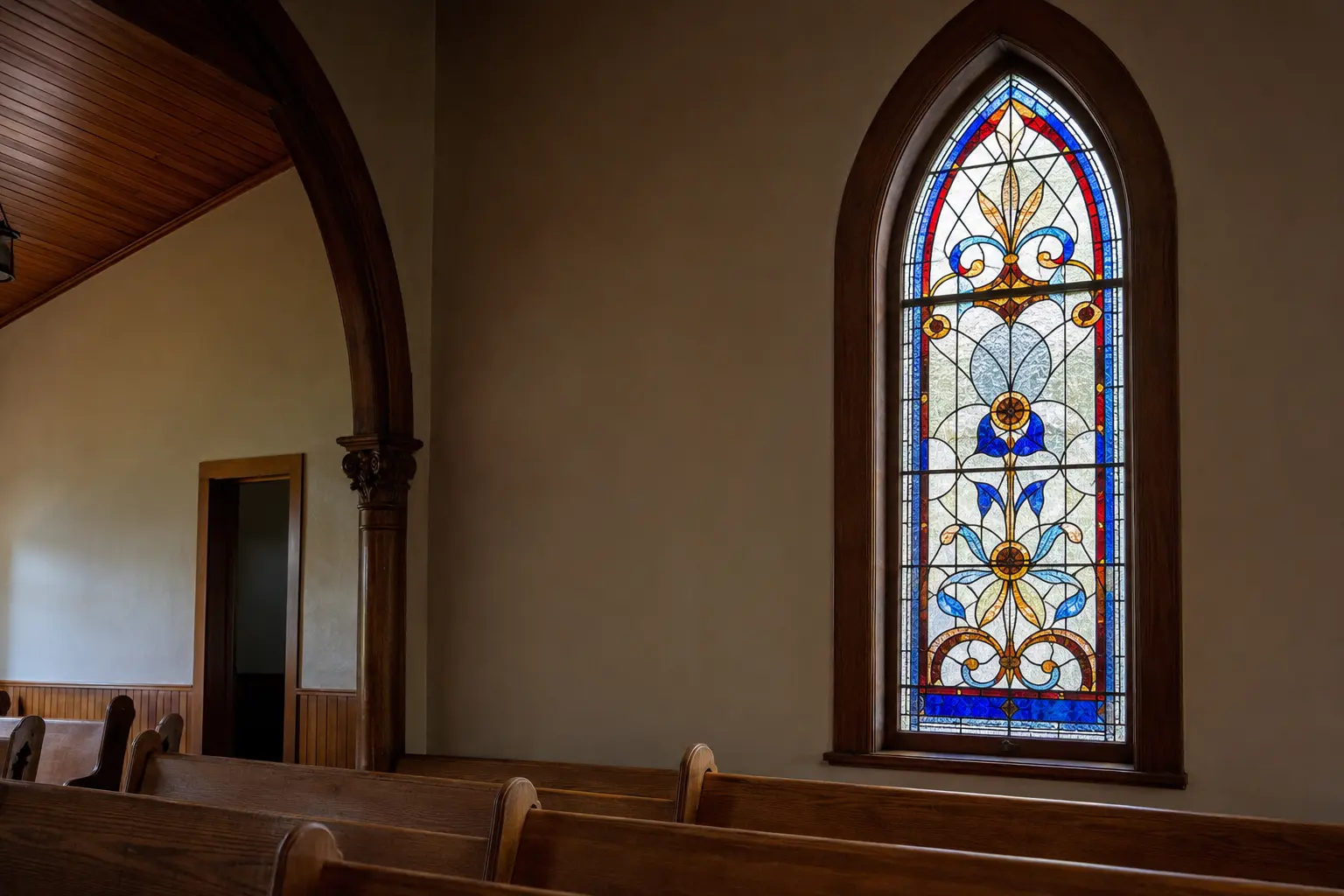
Restored stained glass lancet window in a modest historic church sanctuary
More Than One Kind of Window

Stained Glass Restoration for the Architectural Details Worth Keeping

Decorative glass can be part of a window, entryway, built-in, stair landing, interior door, or freestanding panel. The construction, movement, exposure, and surrounding frame all influence the repair plan.
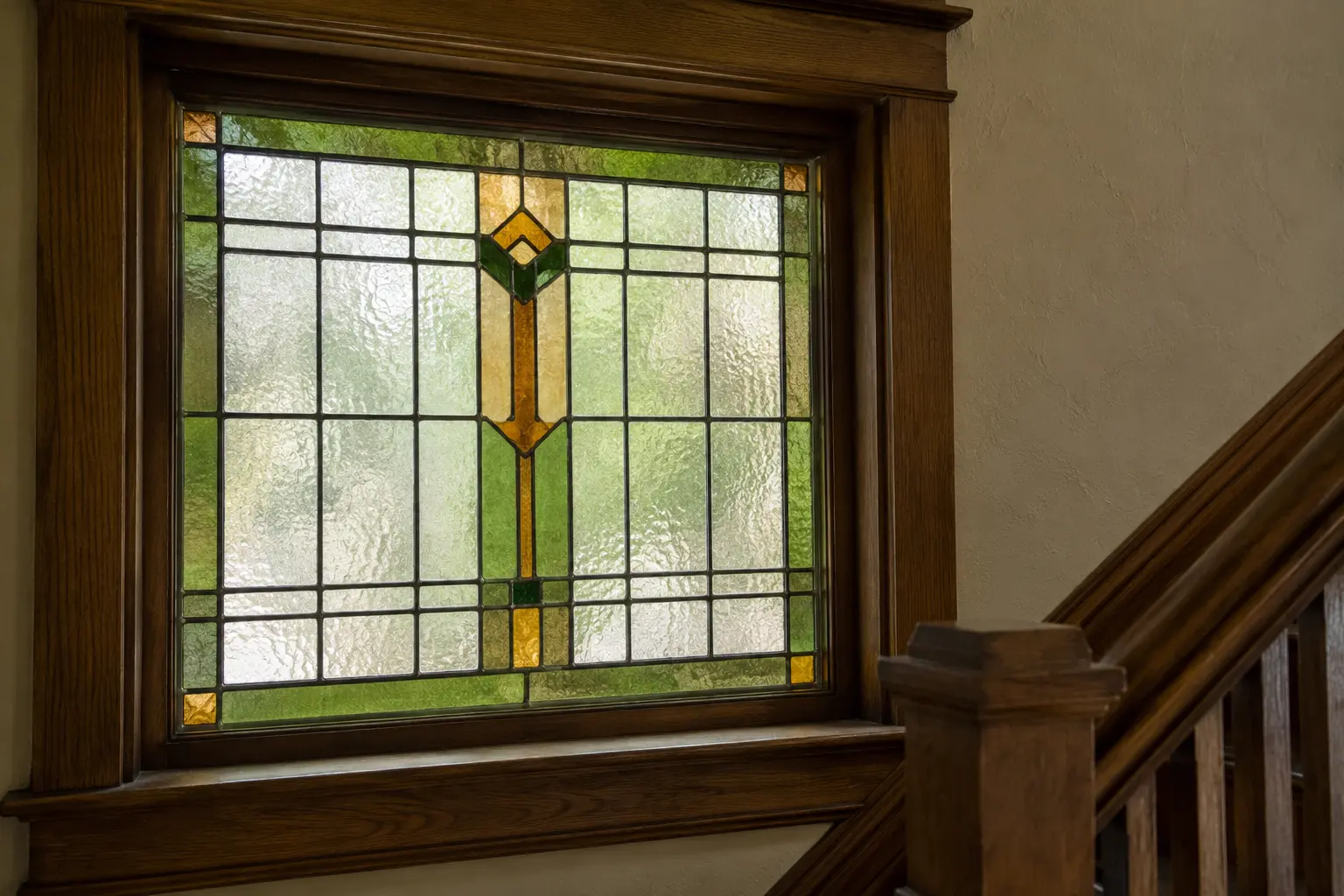
Restored Arts and Crafts stained glass window beside an oak staircase
Windows and Interior Panels

Preserve the Glass That Gives the Home Its Character

Repair and restoration for stained and leaded windows, stair-landing panels, built-ins, cabinet glass, room dividers, and decorative architectural pieces.

Geometric stained and leaded glass window with textured amber green and clear glass
Older and Historic Properties

Match the Repair to the Glass, Frame, and Building

Older glass may be irregular, textured, mouth-blown, opalescent, beveled, painted, or no longer manufactured. Matching is based on the actual visible qualities of the original piece.

Entry Glass

Doors, Sidelights, and Transoms

Repair decorative glass while accounting for daily door movement, perimeter fit, safety, frame condition, and the appearance of the full entry.

Decorative Panels

Cabinets, Built-Ins, and Hanging Glass

Review loose foil, broken glass, damaged borders, weak hanging points, and frames before the piece is returned to use or display.

Historic Material

Antique Stained Glass Repair

Retain original glass where practical, document necessary changes, and avoid making a distinctive older panel look unnecessarily new.

Regional Stained Glass Service

Serving Western Wisconsin, the St. Croix Valley, and Eastern Minnesota

Backwards Progress generally serves stained glass projects within approximately 80 miles of Amery, Wisconsin. Availability depends on the address, access, panel size, condition, and type of work involved.

The service region includes communities such as Amery, St. Croix Falls, Osceola, Somerset, New Richmond, Hudson, River Falls, Rice Lake, Grantsburg, Stillwater, Oak Park Heights, Woodbury, White Bear Lake, North Branch, and surrounding areas.

Have a project outside the listed communities? Send the location and project details. Larger, specialized, or grouped stained glass projects may need to be reviewed individually.

Start With Useful Photographs

What to Send for a Stained Glass Estimate

A useful first review does not require perfect terminology. Clear photographs and basic project information are more valuable than guessing what the materials are.

  • One straight-on photo of the entire window, panel, door, or opening
  • Close-ups of cracks, missing glass, weak joints, bowing, gaps, or leaks
  • Photos of both interior and exterior sides when safely accessible
  • Approximate width and height of the panel or complete opening
  • Property address or city and a description of access
  • Any known history, earlier repairs, protective covering, or recent damage

Not Sure Whether the Window Needs Repair or Complete Restoration?

Start with photographs and the project location. Backwards Progress can help identify the visible concerns and determine what should be assessed next.

Customer Experience

Clear Communication and Careful Glass Work

Read recent customer feedback about working with Backwards Progress. Reviews shown below come from the existing review widget and are not rewritten or duplicated in this page's structured data.

Stained Glass Repair FAQ

Questions About Repair, Restoration, Leaded Glass, and Church Windows

Can a cracked piece of stained glass be repaired?

Often, yes. The appropriate repair depends on the crack, glass type, construction, location, and condition of the surrounding lead or copper foil. A damaged piece may be replaced with glass selected to match the original color, texture, opacity, and pattern as closely as practical. The panel should also be checked for the pressure or movement that contributed to the break.

What is the difference between stained glass repair and restoration?

Repair generally addresses localized damage such as one or more broken pieces, failed solder joints, or a limited weak area. Restoration is broader and may involve complete documentation, removal, disassembly, cleaning, glass repair or matching, re-leading, cementing, reinforcement, finishing, and reinstallation. The condition assessment determines the appropriate scope.

Do you repair leaded glass windows?

Yes. Backwards Progress works with leaded glass windows, entry doors, sidelights, transoms, beveled panels, decorative windows, and related architectural glass. More information is available on the leaded glass window repair and restoration page.

Do you restore church stained glass?

Yes. Church stained glass work may include assessment, documentation, localized repair, panel restoration, re-leading, removal and reinstallation planning, frame and support review, and phased restoration planning. Visit the church stained glass repair and restoration page for the dedicated service information.

Can old glass be matched?

Many older colors and textures can be matched closely, although an exact match is not always possible because historic glass varies and some products are no longer made. The original piece, surrounding glass, transmitted light, surface texture, opacity, and viewing distance all help guide the selection.

Does every bowed stained glass window need complete re-leading?

Not automatically. Bowing is a warning sign that requires evaluation of the lead network, solder joints, panel size, reinforcement, perimeter fit, frame, and earlier repairs. Limited stabilization may be appropriate in some cases, while widespread lead fatigue or distortion may justify complete re-leading.

Can stained glass be repaired onsite?

Some localized repairs may be possible onsite, but other work requires controlled removal and workshop repair. Panel condition, access, size, construction, glass value, safety, and the extent of deterioration all affect that decision.

What affects the cost of stained glass repair?

Pricing depends on panel size, access, construction, glass type, number of damaged pieces, matching difficulty, lead or foil condition, bowing, frame work, removal and reinstallation needs, protective coverings, documentation, and whether the project is a localized repair or complete restoration. Photographs and approximate dimensions help begin the estimate.

What areas does Backwards Progress serve?

Backwards Progress generally serves stained glass projects within approximately 80 miles of Amery, Wisconsin, including communities across Western Wisconsin, the St. Croix Valley, and Eastern Minnesota. Exact availability depends on the project and address.

What should I send when requesting an estimate?

Send a straight-on photograph of the full window or panel, close-ups of the damage, approximate width and height, the property location, and a short description. When safely possible, include interior and exterior views and photographs of the surrounding frame or protective covering.

Request Stained Glass Repair or Restoration

Send photographs and a short description, or call to discuss a stained glass window, leaded glass panel, residential entry, decorative piece, or church restoration project.